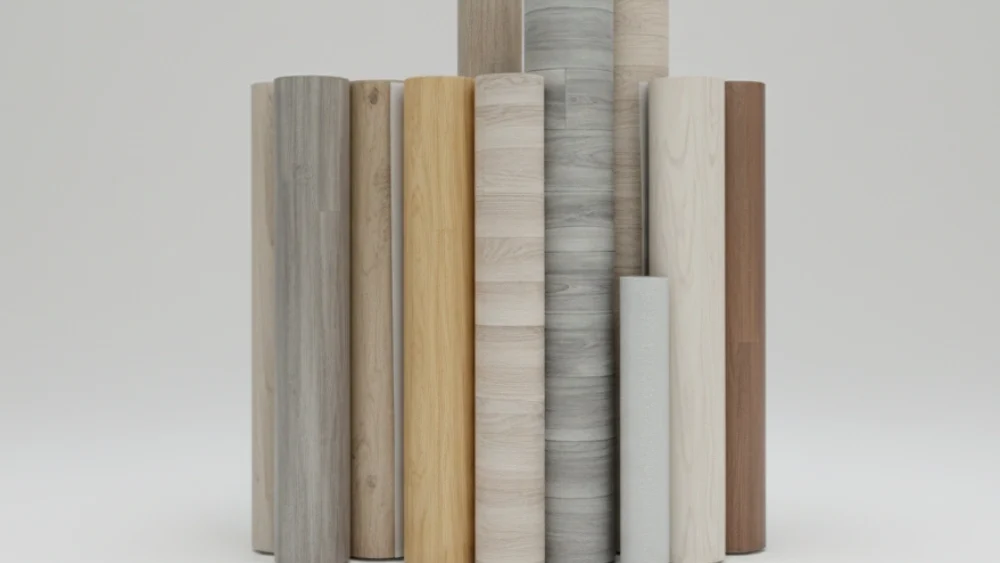
Apartment renovation projects require flooring materials that can maintain stable appearance, practical durability, and consistent supply across multiple rooms or repeated project phases. Flooring defects are often not fully visible during sample approval. Problems such as chair marks, visible seams, batch color variation, surface scratches, and installation rework may appear after handover or daily use.
PVC flooring roll is widely used in apartment renovation because it can cover large areas efficiently, support different interior styles, and meet different budget levels. However, product selection should not be based only on square meter price or surface pattern. For multi-unit apartment projects, buyers should evaluate backing type, thickness, roll width, surface texture, color batch control, packaging, installation conditions, and total project cost.
For contractors, importers, distributors, and apartment renovation operators, the main objective is to select a flooring structure that reduces installation risk, maintenance complaints, material waste, and replacement pressure after occupancy.
Apartment Projects Require Stable and Repeatable Flooring Supply
A sample room may look acceptable even when the material is not suitable for large-scale apartment renovation. Multi-unit projects involve repeated room layouts, different furniture loads, corridor lighting, daily cleaning, and continuous tenant use. Small differences in surface gloss, pattern tone, backing firmness, or roll batch can become obvious after installation across many rooms.
Apartment renovation buyers usually need to consider the following factors:
- consistent appearance across multiple rooms and floors;
- controlled material cost and reduced cutting waste;
- efficient cutting, handling, and installation;
- reasonable walking comfort for tenants or guests;
- surface resistance against furniture, chairs, luggage, and cleaning;
- stable supply for repeat orders, repairs, or later renovation phases;
- export packaging suitable for container shipment, warehouse storage, and site distribution.
For this reason, PVC flooring roll should be evaluated according to project suitability rather than appearance alone.
Match the Flooring Grade to the Apartment Type
Different apartment projects require different material specifications. Budget rental units, standard apartment upgrades, serviced apartments, and developer renovation projects should not be evaluated with the same product standard. The required balance between cost, comfort, durability, and visual consistency varies by project type.
| Project Type | Main Buying Focus | Risk If the Wrong Product Is Used |
|---|---|---|
| Budget rental apartment | Cost control, easy installation, acceptable durability | Early wear, tenant complaints, frequent replacement |
| Standard apartment upgrade | Surface resistance, visual stability, practical comfort | Visible scratches, dirt marks, uneven room appearance |
| Serviced apartment | Walking comfort, design consistency, easy cleaning | Lower guest satisfaction and higher maintenance pressure |
| Developer or contractor project | Batch consistency, delivery control, installation efficiency | Project delay, mixed batches, material waste, rework |
For lower-budget rental housing, a stable and practical structure is usually more important than a premium visual effect. For serviced apartments, walking comfort, surface texture, and long-term appearance retention often carry greater importance. The appropriate specification should be selected according to the actual project segment.
Recommended Specification Logic for Apartment Renovation
The final specification should be confirmed according to project budget, room usage, subfloor condition, furniture load, installation method, and expected service life. The following table provides a practical selection reference for apartment renovation buyers comparing PVC flooring roll options.
| Selection Item | Common Project Choice | Evaluation Focus |
|---|---|---|
| Backing type | Felt backing or foam backing | Balance comfort, indentation resistance, flatness, and installation handling. |
| Thickness | Selected according to budget and use intensity | Confirm whether the thickness matches furniture load, traffic level, and expected service life. |
| Roll width | Selected according to room dimensions and site access | Evaluate seam position, cutting waste, elevator access, and stairway handling before ordering. |
| Surface texture | Moderate matte or practical wood-look texture | Avoid surfaces that show scratches easily or retain dirt in deep grooves. |
| Color and pattern | Neutral wood, stone, or simple commercial pattern | Confirm lighting effect, repeat order availability, and batch consistency. |
| Packaging | Export roll packaging with clear labels | Check roll core strength, wrapping, batch labels, loading plan, and site distribution requirements. |
Felt Backing and Foam Backing Require Different Evaluation Standards
Backing structure affects walking comfort, flatness, indentation resistance, roll handling, and total project cost. Hand feel can be used as an initial reference, but it should not be the only basis for material selection. Apartment rooms often contain beds, wardrobes, desks, chairs, and other long-term furniture loads. Therefore, backing density and pressure resistance should be checked before bulk procurement.
Felt backing PVC flooring roll is often suitable for general apartment renovation because it provides a balanced combination of handling stability, cost control, and practical use performance. It is commonly considered for rental apartments, multi-room renovation, and distributor stock programs.
Foam backed vinyl flooring may be suitable for projects where softer walking comfort is a priority. However, for apartments with heavy furniture or long-term tenant use, indentation resistance and backing density should be reviewed carefully before mass installation.
| Factor | Felt Backing | Foam Backing |
|---|---|---|
| Walking feel | Moderate and practical | Softer and more cushioned |
| Furniture pressure | Generally more stable for regular apartment renovation | Requires closer indentation testing |
| Installation handling | Suitable for many multi-room projects | Depends on backing density and room condition |
| Typical application | Rental apartments, multi-room renovation, distributor stock | Comfort-focused residential rooms or selected apartment areas |
Surface Selection Should Reflect Long-Term Residential Use
Apartment flooring is exposed to frequent movement, furniture pressure, luggage, cleaning equipment, and different tenant habits. A surface that performs well in a product photo may not remain practical after long-term daily use. For renovation projects, the surface should be assessed according to visibility of scratches, ease of cleaning, texture depth, and visual stability under different lighting conditions.
Before confirming the surface, buyers should check:
- whether chair marks and light scratches are easy to notice;
- whether the pattern can reduce the visibility of dust and cleaning marks;
- whether the texture is easy to clean after tenant use;
- whether deep grooves may retain dirt;
- whether the floor maintains a stable appearance under daylight and corridor lighting.
For rental apartments and standard renovation projects, a slightly matte wood-look surface is often more practical than a high-gloss finish. It can reduce the visibility of minor scratches and cleaning marks while remaining compatible with common wall colors and furniture styles.
Roll Width Should Be Planned According to Room Layout and Site Conditions
Roll width affects seam position, cutting waste, labor efficiency, and material handling. Wider rolls can reduce seams in larger rooms, but they may also create handling difficulties in buildings with small elevators, narrow stairways, or limited temporary storage space.
Before placing an order, buyers should compare roll width with actual room dimensions and site conditions:
- whether main rooms can be covered with fewer seams;
- whether small rooms will create excessive cutting waste;
- whether rolls can be moved into the building efficiently;
- whether one width can work across several unit layouts;
- whether the project prioritizes seam reduction or easier handling.
For projects where seam reduction is important, 4 meter width PVC flooring roll may be considered. However, wider material should still be evaluated together with site access, roll weight, cutting waste, and installation sequence.
Pattern Choice Should Support Long-Term Visual Stability
Apartment flooring patterns should remain acceptable after repeated use and across different interior layouts. A strong pattern may look distinctive in one sample room, but it may become visually heavy when installed across many units. Pattern selection should consider both design effect and future maintenance.
For multi-unit renovation, practical patterns usually have the following characteristics:
- stable appearance under different room lighting;
- reasonable ability to hide minor scratches and dust;
- compatibility with common wall colors and furniture styles;
- moderate visual expression across repeated rooms;
- availability for repeat orders or later repair work.
Wood-look PVC flooring roll is commonly selected for apartment renovation because it provides a neutral and familiar visual effect. Very dark colors, high-gloss surfaces, and overly complex patterns should be tested carefully before large-scale use.
Installation Performance Depends on Site Preparation
PVC flooring roll can support efficient apartment renovation, but successful installation also depends on site preparation. Uneven subfloors, dust, moisture, unsuitable adhesive, and rushed cutting may result in waves, hollow spots, edge lifting, visible seams, or rework. These issues may be mistaken for material defects, although they are often related to installation conditions.
Before installation, contractors should confirm:
- subfloor flatness;
- moisture condition;
- adhesive compatibility for glue-down installation;
- cutting plans for corners, doorways, and corridors;
- seam positions in each room;
- ventilation time after installation.
For large renovation projects, installation planning should be included in the purchasing process. A lower-priced material may increase the total project cost if it slows installation or causes rework.
Color Batch Control Is Important for Multi-Unit Projects
Color variation is a common issue in multi-room flooring projects. Slight differences may not appear significant in storage, but they can become visible after installation under daylight, corridor lighting, or repeated room layouts.
For apartment renovation projects that require many rolls, batch planning should be confirmed before production and shipment. Rolls should be clearly labeled, and materials from different batches should not be mixed in the same visible area whenever possible.
Batch control is especially important for:
- serviced apartments;
- rental housing chains;
- dormitories;
- developer renovation projects;
- repeat orders across several project phases.
If spare rolls are required for future repair or replacement, this requirement should be discussed during the initial order. Delayed purchasing may make color matching more difficult.
Packaging Affects Shipment, Storage, and Site Distribution
Packaging should be treated as part of project cost control. Weak roll packaging may lead to crushed edges, surface contamination, unclear labels, damaged rolls, slow unloading, or confusion during room-by-room distribution.
For export apartment renovation orders, buyers should confirm roll length, roll weight, core strength, wrapping method, batch labels, container loading plan, and site handling requirements before shipment. Good packaging supports sea freight, warehouse storage, forklift handling, project delivery, and installation sequence management.
For distributors and contractors, packaging is not only a shipping detail. It directly affects unloading efficiency, stock management, roll identification, and replacement risk.
Total Project Cost Is More Important Than Unit Price Alone
Square meter price is an important purchasing factor, but it does not represent the full cost of apartment renovation flooring. A lower unit price may create higher overall cost if the material causes more cutting waste, slower installation, early surface complaints, or additional repair work.
| Cost Item | Project Impact |
|---|---|
| Material price | The visible quotation cost, but not the full project cost. |
| Cutting waste | Incorrect roll width or poor layout planning can increase unused material. |
| Installation labor | Difficult handling, additional seams, or rework can increase labor cost. |
| Adhesive and accessories | Installation method affects additional material requirements. |
| Shipping and unloading | Roll weight, packaging, and loading method affect logistics efficiency. |
| Replacement risk | Early surface complaints or batch differences may require repair material. |
For contractors, importers, and distributors, total project cost provides a more accurate basis for purchasing decisions than the lowest quotation line. The more suitable material is usually the one that supports stable installation and reduces later maintenance problems.
Before Placing a Bulk Order
Apartment renovation flooring must perform consistently across multiple rooms and repeated project phases. Backing type, surface durability, roll width, batch control, installation conditions, and packaging all influence the final project result.
Before requesting a quotation, buyers should provide room layout, target thickness, backing preference, quantity, destination, and installation schedule. With complete project information, Vast Plastic can help match a PVC flooring roll structure that supports the renovation plan and reduces avoidable purchasing risk.